
Skin fade vs. taper fade — which one actually suits you
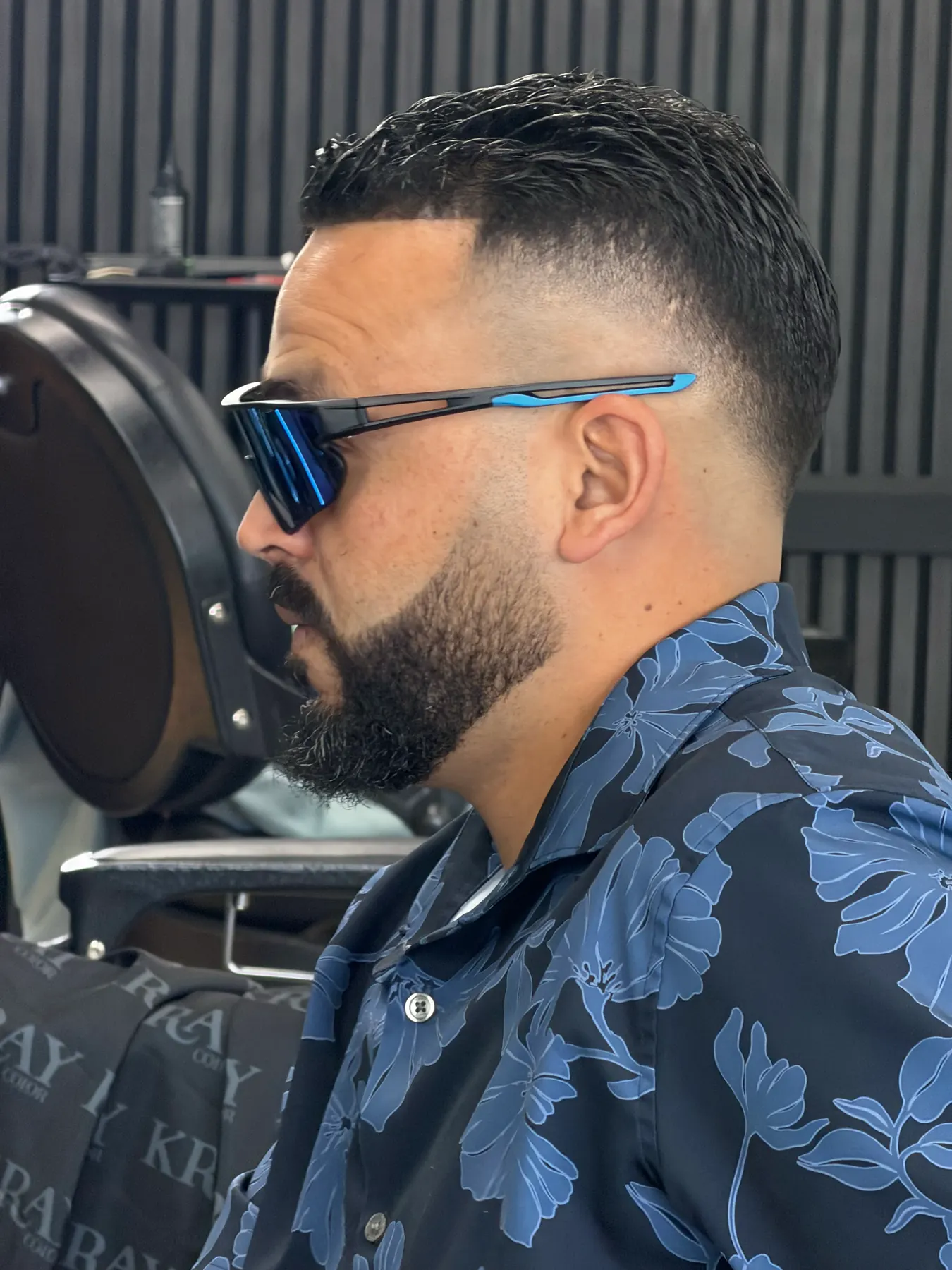
People ask for a fade and mean five different haircuts. The word covers a whole family, and the two ends of it — a skin fade and a taper fade — sit a long way apart in both look and upkeep. Working out which one actually suits you is less about which looks better in a photo and more about how you live between appointments.
The actual difference
A skin fade takes the hair all the way down to bare skin at the bottom. The gradient starts from nothing and climbs. It is the sharpest version of a fade and the highest contrast, because the eye reads the jump from skin to hair as a hard edge no matter how well the blend is done.
A taper fade shortens the hair as it goes down but never reaches skin. It stops at a short guard, usually around the ears and the nape only. Much softer, much less obvious, and much easier to live with.
Everything else you have heard — low, mid, high, drop, burst — describes where on your head the gradient starts, not how short it finishes. A low skin fade and a high skin fade are the same haircut at different altitudes. A burst fade is a fade that curves around the ear instead of running straight around the head. None of those words tell your barber whether you want skin at the bottom, which is why "high fade" on its own still leaves the most important question open.
What actually decides it
Three things, in this order.
How often you are realistically back in the chair. This matters more than face shape, hair type, or anything else on the list. A skin fade looks its best for about a week. A taper holds for a month. Pick the one that matches the calendar you actually keep, not the one you wish you kept.
What your hair does on its own. Density and growth pattern set the ceiling on contrast. Fine or thin hair at the sides gives a skin fade very little to blend into, so the gradient can look abrupt however carefully it is cut. Thick hair with a strong growth pattern gives a blend room to breathe. Neither is better — they just want different haircuts.
Where you spend your week. A skin fade reads as a statement in a way a taper does not. That is a good thing in plenty of rooms and the wrong thing in others, and only you know which rooms you are in.
How to pick
Go skin if you like a defined, clean look, you have contrast to work with, and you do not mind coming back often.
Go taper if you want something that still reads tidy at week three, if your job leans conservative, or if it is your first time in the chair here and you would rather not commit to high contrast straight away. A taper is the safer first cut with a new barber, because it is the one that leaves options open.
A middle option: a low taper with a line-up. You get the crisp edge around the hairline — which is most of what people are actually reacting to when they say a cut looks sharp — without the maintenance of a full skin fade. This is the compromise most people land on once they have tried both.
What it means for how often you are back in
A skin fade grows out visibly fast. The bare section fills in within days and the gradient blurs from the bottom up, so the cut loses its shape in the exact place the whole design depends on. Most people are back every two weeks.
A taper is far more forgiving. Four to six weeks is normal before it stops holding its shape, because there is no bare skin to fill in — the short guard just gets slightly less short, which nobody notices from across a room.
That difference is worth thinking about before you sit down. A skin fade booked every six weeks spends most of its life not looking like a skin fade, and you end up paying for a haircut you only see for a fraction of the time you are wearing it.
Growing one out into the other
You can move between them, and it is easier in one direction than the other.
Going from a taper to a skin fade takes one appointment — everything gets taken shorter, and the extra length above the fade line stays where it is.
Going the other way takes two or three visits. The bare section has to grow back in far enough to hold a guard, and in the middle of that there is a stage where the sides are longer than the fade line above them. Say what you are doing at the start and the awkward stage can be cut around rather than cut into.
Just bring a photo
Genuinely the most useful thing you can do. The words are slippery and everyone's mental picture of "mid fade" is slightly different. A photo takes the guesswork out in about four seconds — and one taken from behind is worth three from the front, for reasons worth a whole post of their own.
If you do not have one, say what you do not want. That is often more useful than what you do, and we will talk it through before anything gets switched on. There are plenty of both cuts in the gallery if you want somewhere to start.