
Bringing a photo to the barber — what actually helps
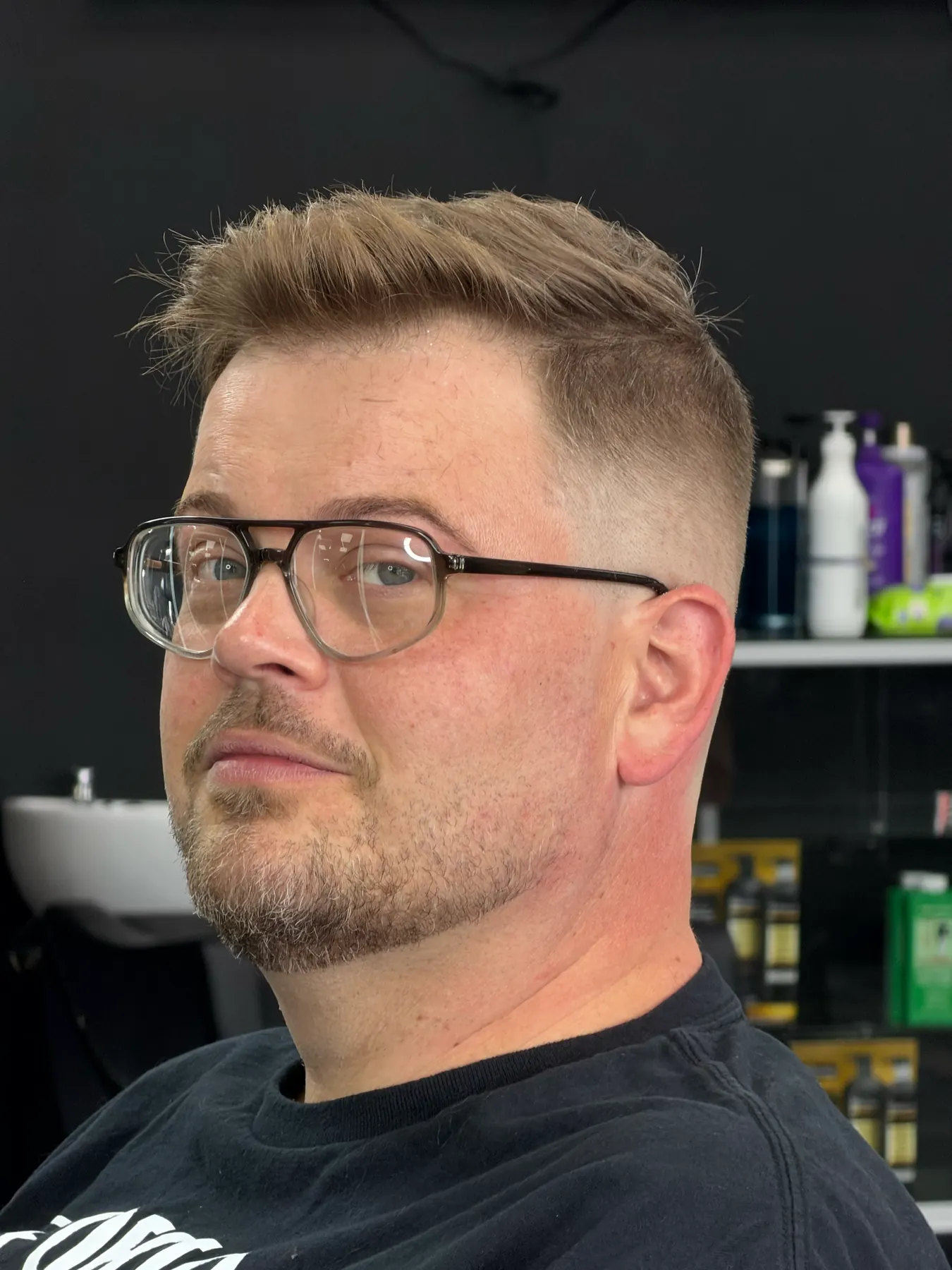
Bringing a photo to the barber is the single best thing you can do for a haircut. But some photos help a lot more than others, and what actually helps is usually not what people expect — the useful one is rarely the one you would have picked.
What makes a photo useful
The back and sides, not just the front. Almost every reference photo is a front-facing headshot, and almost every decision in a fade happens where you can't see it. One photo from behind is worth three from the front. If you are showing a fade, the front of the head is the part the fade barely touches.
Hair that's roughly like yours. Density and growth pattern set the ceiling on what's achievable. Straight, thick hair holds a hard part that fine, wavy hair simply won't — no technique closes that gap. A photo of hair that behaves differently to yours is a photo of a different haircut wearing the same name.
Styled the way you'd style it. If the photo is freshly blow-dried with product and you towel-dry and leave the house, you're going to be disappointed at home even if the cut is right. Worth saying out loud: "I want this, but I don't blow-dry." That one sentence changes what gets cut, not just what gets said.
More than one. Two or three photos of the same idea tell us what the common thread is. A single photo can be read several ways — you might be pointing at the length on top and we might be reading the fade line, and neither of us finds out until it is cut.
What doesn't help much
- Heavily filtered or edited photos — the hairline is often retouched
- Photos where the hair is wet, which hides the real shape
- Celebrity photos with professional styling behind them
- Photos of a cut that's four weeks grown out, if you want it to look like that on the day
None of these are useless. Just know they show a destination, not a starting point.
That last one catches more people than the rest combined. A cut photographed at week four has settled — the fade has softened, the top has dropped, the edges have blurred. Cut fresh, the same haircut looks sharper and shorter than the photo. If the grown-out version is what you want, the honest way to get it is to cut something slightly longer and let it arrive there.
Where to find a better reference
The best reference photo is a cut on a head shaped like yours, photographed in ordinary light, from more than one angle. That is a short list, and it is mostly not what a search turns up.
Two places that beat a search. The first is your own camera roll — a photo of your own hair at a length you liked is worth more than any photo of anyone else, because every variable except the cut is already matched. Take one when a haircut is at its best, not just when it has grown out.
The second is a shop's own work, which is the same hair type range, the same lighting, and the same hands. There are plenty of angles in our gallery for exactly that reason.
You don't need one
If you turn up with nothing, that's completely fine. You'll get asked a few questions instead: how you wear it, how much time you spend on it in the morning, whether you want it to still work in a month.
Honest answers to those are worth more than a photo of someone else's head. "Fifteen minutes and a comb" and "thirty seconds and my hands" are two different haircuts, and only one of them is going to survive your actual mornings.
The thing worth saying out loud
Tell us what you didn't like about the last one. That single sentence prevents more bad haircuts than any reference photo — it's the fastest way to rule out the wrong direction before anything is cut.
"Too short on top", "the fade started too high", "it looked great and then looked wrong in a week" — each of those points at a different fix, and none of them shows up in a photo. If the last one grew out badly rather than started badly, that is a conversation about which fade you should be asking for, not about the cut itself.
What happens with the photo
It gets looked at properly, and then it gets talked about — usually with one or two questions about the parts it doesn't show. What a photo cannot tell anyone is where your hair grows in a different direction, where the crown sits, or how your hairline actually runs.
Bring the photo. Expect a couple of questions about it. Both of those together are worth far more than either one alone.