
How often you should really book a beard line-up
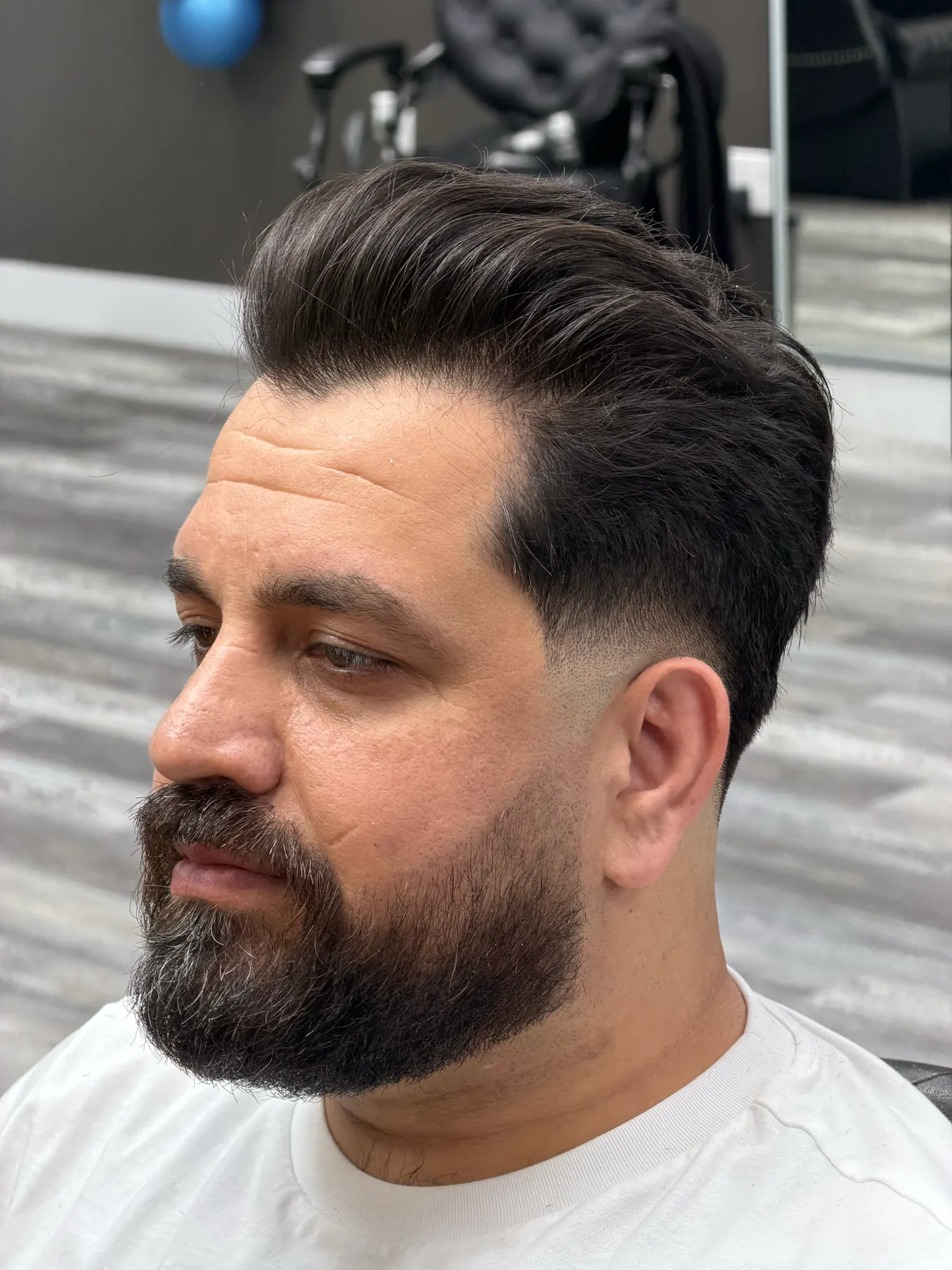
A beard doesn't grow evenly. The neck and cheeks fill in faster than the moustache and the chin, which is why a beard that looked sharp two weeks ago now looks like it's slowly eating your jaw. How often you should really book a beard line-up comes down to which of those areas gives you away first.
The short answer
Every two to three weeks if you keep a defined line. Every four to six if you wear it fuller and only want the neckline kept honest.
The tell is the cheek line. When the stray growth above it starts joining up into something that reads as intentional, you're past due. That is usually about a week before most people notice it themselves, because you see your beard every day and the change is gradual.
Why the neckline matters more than the cheek line
Most of what makes a beard look unkempt happens below the jaw, not above it. The neckline is what separates "beard" from "just hasn't shaved."
It also sits where you can't see it properly in a mirror, which is why it's the first thing to go wrong when people trim at home. You are working at an angle, on a curved surface, with your chin tipped up — the position that flattens the exact curve you are trying to cut.
Rough guide if you're maintaining it yourself between visits: the neckline should sit roughly two fingers above the Adam's apple, curving up toward the back of the jaw. Not along the jawbone itself — that's the most common home mistake and it makes a beard look pasted on, because a real beard has never ended in a straight line in the history of beards.
What a line-up is actually doing
It is three separate decisions that happen to get done in one sitting.
The cheek line sets how much of the upper face the beard is allowed. Left alone it climbs, and a beard that climbs makes the face look shorter.
The neckline sets where the beard ends underneath, and it is the one doing the most work — see above.
The moustache and the corners of the mouth are the detail nobody asks for and everybody notices. Hair over the lip line is the difference between a beard that looks kept and one that looks endured.
A line-up sharpens all three without touching the length. That is worth knowing, because "line-up" and "trim" get used as if they are the same appointment and they are not.
Between appointments
- Brush it downward before you trim, so you're cutting the real length
- Trim dry, not wet — wet hair sits longer than it will when it dries
- Leave the cheek line alone if you're unsure; it's easy to take too much and it takes weeks to come back
- Oil after washing, while the skin is still slightly damp
- If you only do one thing, do the neck — it buys you a week
The mistake that costs three weeks
Trimming a little more each time to "even it up." Every pass takes the shortest side as the new reference, the other side gets brought down to match, and the whole shape creeps upward without a single obvious moment where it went wrong.
If both sides look uneven, the fix is almost always to leave it alone and let the shorter side catch up — not to keep cutting until they agree. Ask about it in the chair before you take anything off at home. Growth takes weeks; stopping takes a decision.
Growing it out?
Tell us. There's a real difference between a trim that maintains the current shape and a trim that keeps things tidy while the length builds underneath.
If you're two months into growing something out, we'll usually clean the neck and leave everything else — but only if we know that's the plan. Otherwise the default is to keep the shape you walked in with, which is the right default and exactly the wrong one for someone mid-way through growing a beard.
The awkward stage is real and it is survivable. It sits at roughly weeks four to eight, when there is enough length to lose the shape and not enough to hold one. Keeping the neck and cheeks clean through it is what makes the difference between looking like you are growing a beard and looking like you have given up.
Booking it with a cut
If you are already in for a fade, the line-up is the natural thing to have done at the same time — the edges get read together, and a sharp skin fade or taper above a soft beard line is the most common way a good haircut still ends up looking unfinished.